2026-10-21 ·
Appliance Emergency: What to Do Before the Repair Visit
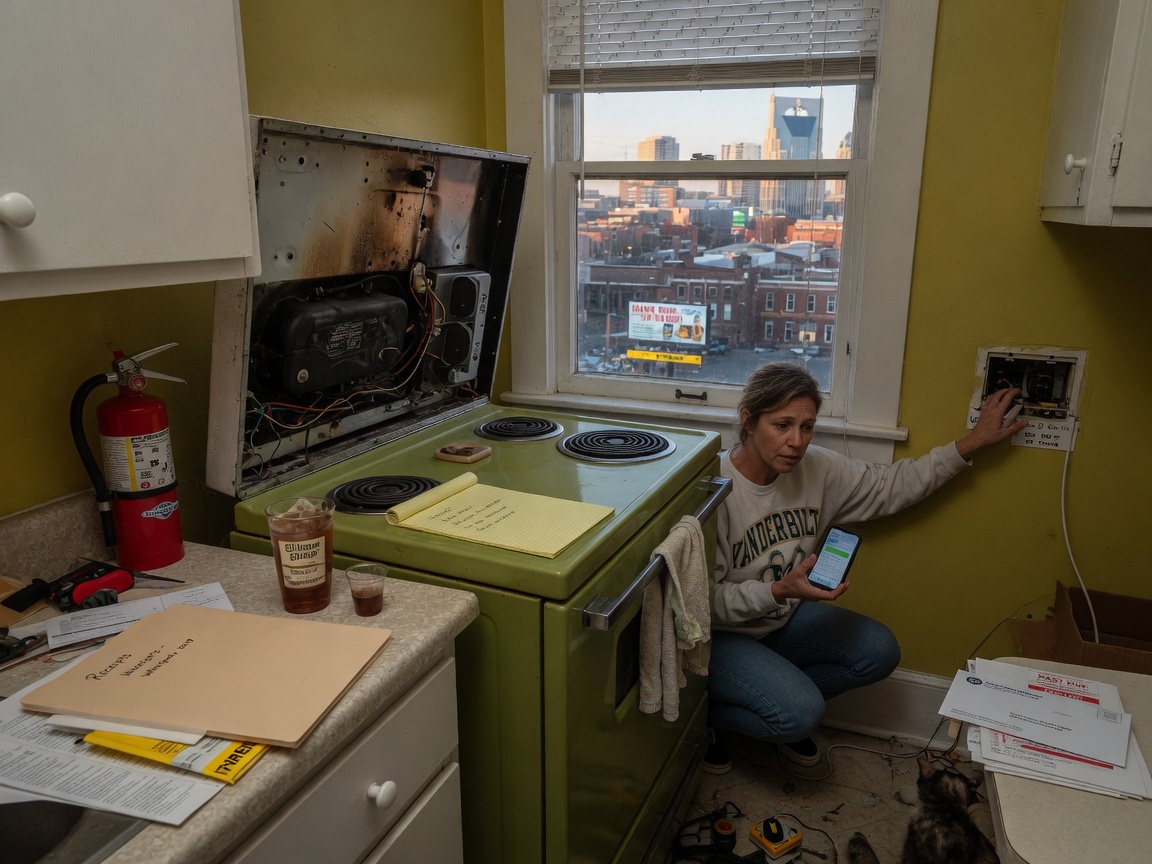
An appliance emergency is any appliance failure that puts people, your floors or your food at risk right now. A gas smell, smoke, water you can't stop and a burner that won't shut off can't wait for a repair visit. Everything else can be made safe first and fixed after.
The first hour is about getting everyone safe, stopping the damage and writing down what the appliance did. Below is what to do for each kind of failure.
Is It an Appliance Emergency or Can It Wait?
It's an emergency when gas, smoke, flames, sparking or water you can't stop is involved, because each one can hurt someone or ruin a floor before any technician could get there. Those need action in minutes. And for gas or fire your first call goes to 911 or the gas utility, not a repair company. A dead fridge or a contained leak is urgent, not an appliance emergency.
- Act now, leave if needed: A gas smell near the range. Flames or smoke from any appliance. Sparks, or a hot melting-plastic smell at a plug or cord.
- Stop the damage in minutes: Water running onto the floor from a washer, dishwasher or fridge line. A burner or oven that stays on with the knob set to off.
- Urgent, but not a race: A refrigerator or freezer that has gone dark and quiet. Food is on a clock that starts when the cooling stops, so work through the fridge steps below before you start phoning around.
- Can wait for a normal visit: An ice maker that stopped making ice. A dishwasher that leaves dishes wet. A microwave that runs but doesn't heat. One weak burner.
What to Do If You Smell Gas From the Stove or Oven
Leave the house right away and call from outside. [Piedmont Natural Gas](https://www.piedmontng.com/our-company/safety-information), the gas utility serving Nashville, asks customers to call 800.752.7504 if they smell natural gas or suspect a leak, and to call 911 for emergencies.
Follow these steps in order.
- Get everyone out: Walk people and pets out.
- Create no spark: Don't touch light switches, plug or unplug anything, use the garage door opener or light a match.
- Call from outside: Use your cell phone in the yard or from a neighbor's house. Dial 800.752.7504, or 911 if anyone feels sick or you hear hissing.
- Stay out: Don't go back in to turn the stove off. The utility decides when the house is safe.
- Call for repair last: Once the gas company has cleared the house, call us about the range.
Natural gas carries an added sulfur odor, often described as rotten eggs. At a range the usual culprits are a burner left on without a flame, a failed igniter that lets gas flow with nothing to light it, or a loose connector on the gas line behind the range. Don't pull the range out from the wall to look.
Dryer Burning Smell or Smoke: Stop the Cycle
Turn the dryer off at once if you smell burning or see smoke. Unplug it or switch off its breaker only if you can reach either safely, and keep the door shut. If you see flames, get out and call 911.
The [U.S. Fire Administration](https://www.usfa.fema.gov/downloads/pdf/statistics/v13i7.pdf) estimates about 2,900 clothes dryer fires in residential buildings each year in its 2008 to 2010 data, with about 5 deaths and 100 injuries. Failure to clean was the leading factor at 34 percent, so lint is the one cause you can see and control. Fires run higher in fall and winter and peak in January at 11 percent. A burning smell usually comes from one of three places.
- Packed vent run: Lint fills the duct that carries hot air from the dryer to the outside wall. Heat has nowhere to go, and lint cooks on the heating element.
- Lint on the element or in the cabinet: Lint that slips past the trap settles on the element and scorches.
- Worn drum belt or seized roller: These smell like hot rubber.
Once the dryer has cooled, empty the lint trap and pull the dryer forward to look at the vent hose behind it. A crushed or lint-filled hose is a fire risk all by itself, and so is a long vent run with many elbows. Don't restart the dryer until you know why it overheated, because a smell that fades once the drum stops is still a warning, and the lint or worn part behind it will be waiting for the next load. A technician can clear the vent run, inspect the element and thermal fuse, and test the belt and rollers through dryer repair.
Washer or Dishwasher Leaking Water Everywhere
Stop the water at its shut-off valve first, then deal with the floor. Most washers have two valves on the wall behind them, one hot and one cold, and each closes with a quarter turn. Here is how to shut off water to a washer.
- Find the two valves: Look behind the washer, where the hoses meet the wall. A lever handle is closed when it sits crosswise to the pipe. A round knob closes by turning clockwise until it stops.
- Check the outlet before you touch anything: If water is near the outlet or the cord, stay out of it. Switch off that circuit at the breaker panel only if the panel is dry and you don't have to step through water. Otherwise call an electrician.
- Contain the water: Lay towels along the edge of the spread, move rugs and boxes, and use a wet vacuum or mop.
A dishwasher leaking onto the kitchen floor has its own shut-off, usually under the kitchen sink on the supply line. If you can't find it, close the main water shut-off where the line enters the house, then switch off the dishwasher's breaker so the pump stops running while you work out where the water is coming from. A refrigerator with an ice maker has a small valve on its supply line, behind the fridge or under the nearest sink.
The water usually traces to a short list of parts. On washers it's often a split drain hose, a loose clamp, a worn door boot or a clogged drain pump. On dishwashers it's usually a worn door gasket, a clogged filter or a stuck inlet valve that overfills the tub. On a refrigerator it's the water line or the inlet valve. Pumps and valves often have to be ordered, and a clamp or hose usually doesn't. For washer leaks, see our washer repair page.
Oven or Burner That Won't Turn Off
Cut the power or the gas to the range if a burner or oven stays on with the knob set to off. On an electric range, switch off the range's breaker, a double breaker that feeds a 240-volt circuit. On a gas range, close the gas shut-off valve with a quarter turn, but only if you can reach it without moving the range.
If flames are inside the oven, keep the door closed, turn the oven off and call 911 if the fire doesn't go out. Never throw water on a grease fire.
The cause is usually specific. A stuck relay on the electronic oven control, the switch that sends power to the bake element, can leave the element heating long after the display reads off. A failed infinite switch behind a burner knob (the part that sets how hot an electric coil gets) can keep the coil glowing. Leave the range off until it's checked through oven and range repair.
Refrigerator Stopped Working: Food Safety Steps
Keep the doors shut. [FoodSafety.gov](https://www.foodsafety.gov/blog/three-ways-keep-food-safe-when-you-lose-power) says a refrigerator keeps food cold for about 4 hours with the door closed, and a full freezer holds its temperature for about 48 hours, or 24 hours if it's half full. The same clock applies to a dead refrigerator as to a power outage.
If the refrigerator stays warm longer than 4 hours, throw away refrigerated meat, poultry, fish, eggs and milk. Food can be refrozen if it still has ice crystals or reads 40°F (4°C) or below. Count from when the refrigerator likely quit.
- Look and listen: If the interior light is on, the refrigerator has power. If it's dark and silent, suspect the power supply or the control board.
- Check the plug: Push the plug in fully.
- Check the breaker and any GFCI outlet: Reset a tripped breaker once. If the refrigerator is on a GFCI outlet (the kind with test and reset buttons, common in garages), press reset. If the breaker trips again right away, leave it off and call.
- Reset after a storm: Middle Tennessee storms cause flickers and short outages that can trip a breaker or leave a control board unresponsive after power returns. Unplug the refrigerator for a few minutes, then plug it back in.
- Protect the food: If the unit doesn't come back, move the most perishable food to a cooler with ice and keep the freezer closed.
If it runs but isn't cold, that's a cooling failure, such as a failed evaporator fan motor or a frosted evaporator. Our refrigerator repair service also covers freezers and built-in units.
What to Have Ready When You Call
Have the brand, model number, what the appliance is doing and any error code in front of you. With those details, a technician can narrow the likely failed part before arriving and can tell whether it's a common part or one that has to be ordered.
- Brand and model number: The label is usually inside the refrigerator wall, on the door frame of a washer or dryer, or on the frame around the oven door. Photograph it.
- What it's doing: Describe the sound, smell, light or leak, and when it started. "Hums but doesn't cool" beats "broken."
- Error code: Note any code on the display or the number of blinking lights.
- What you've already done: Say if you reset a breaker, closed a valve or called the gas company.
We take calls Monday through Saturday, 8am to 7pm. Outside those hours, gas and fire go to 911 or Piedmont, and water stays shut off at the valve until someone can look.
Frequently Asked Questions
How long can food stay in a refrigerator that stopped working?
About 4 hours with the door kept closed, according to FoodSafety.gov. After that, throw away refrigerated meat, poultry, fish, eggs and milk. A full freezer holds for about 48 hours if you don't open it, and a half-full one for about 24 hours.
How do I shut off the water to a washer?
Turn the two valves behind the washer, one hot and one cold, a quarter turn for levers or clockwise for round knobs. If you can't reach them, close the main water shut-off where the line enters the house, often in a basement or crawl space.
Is it safe to keep using a dryer that smells like burning?
No. Stop the cycle, unplug the dryer or switch off its breaker if you can do so safely, and keep the door shut so a fire inside has no extra air to feed on. Restart it only after the cause is found.
After the First Hour: Call for Repair
Once the danger is handled, the rest is a repair job, and a calm one if the first hour went well. Keep these.
- Gas or fire first: Leave, call from outside, and let the utility or 911 tell you when it's safe to go back in.
- Fridge doors stay shut: About 4 hours for the refrigerator, and 24 to 48 hours for the freezer.
- Photograph the label: It speeds up every repair call.
If your appliance emergency is under control and the appliance still needs fixing, [Call (615) 412-2497](tel:6154122497) or read about our urgent appliance repair service.