2026-08-29 ·
How Long Do Home Appliances Actually Last?
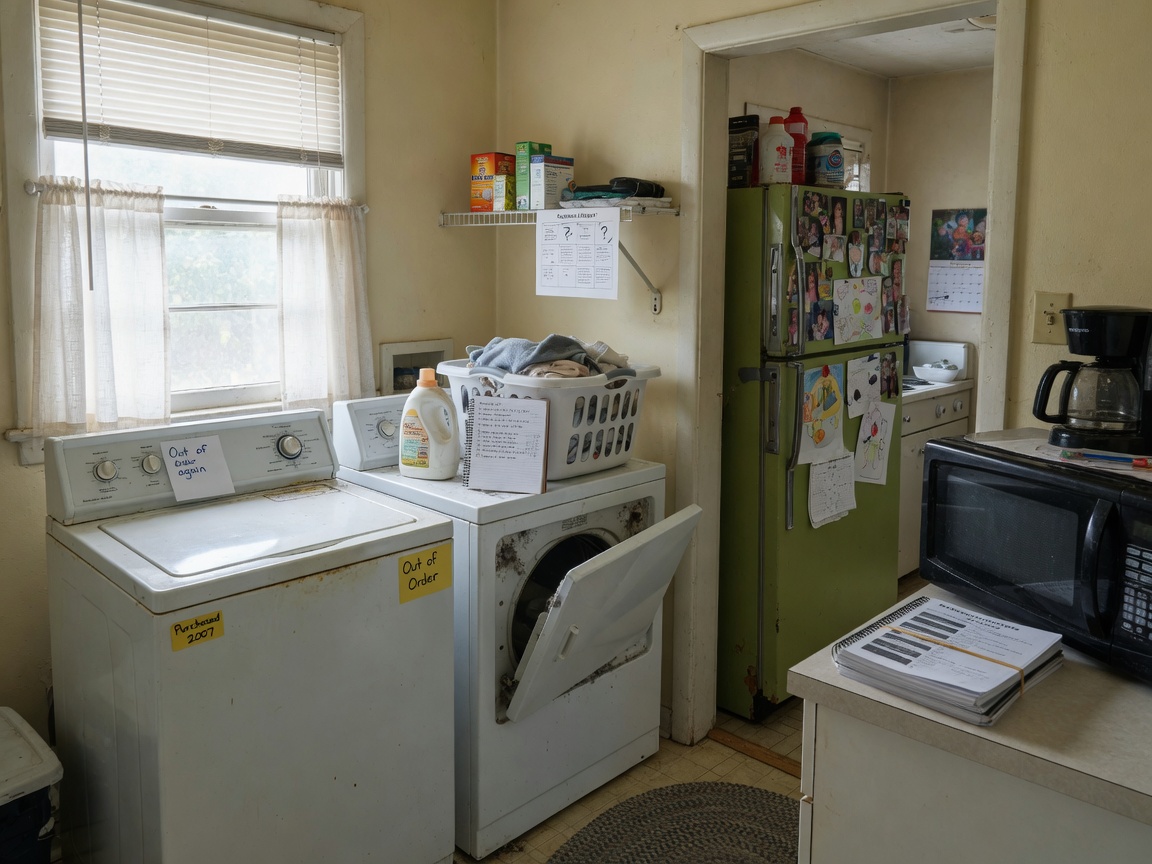
Somewhere in your kitchen or laundry room, an appliance is quietly getting closer to a failure. Most homeowners only think about that once something's already gone wrong: the fridge is warmer than it should be, the dishwasher isn't cleaning like it used to, the dryer runs a full cycle and the clothes come out damp.
Here's what's typical, what the early signs look like, and what upkeep actually moves the needle. Call (615) 412-2497 any time you'd rather have it looked at than guess.
What's Typical, in Broad Terms
These are commonly cited, general ranges, not a schedule for your specific unit. A well-maintained appliance can run well past its typical window, and a neglected one can fail early.
Refrigerators and freezers are often said to last roughly ten to thirteen years. Dishwashers tend to run a bit shorter, commonly cited around eight to twelve years, partly because Nashville's hard water is harder on heating elements and spray arms than softer water elsewhere. Washers and dryers are usually given a range of roughly ten to fourteen years. Ovens and ranges are often cited toward the higher end, ten to fifteen years, since bake elements and igniters are simple, replaceable parts.
Signs a Refrigerator or Freezer Is Wearing Out
A fridge that runs constantly, rather than cycling on and off, is working harder than it should. So is one where the compressor area feels unusually hot, or where you hear a clicking sound followed by the motor failing to start, which often points to a failing start relay.
Frost building up inside a freezer, especially around the back wall, usually means the defrost heater or defrost thermostat has stopped doing its job. If the fridge section stays cool but the freezer struggles, or the reverse, a failed evaporator fan motor is a common cause.
Signs a Dishwasher Is Wearing Out
Dishes coming out cloudy or still gritty, water pooling in the bottom of the tub after a cycle, or a wash that takes noticeably longer than it used to are all common tells. A clogged filter is the first thing worth checking, since it's the most common cause and the easiest to fix yourself.
A dishwasher that drains slowly or not at all often has a blocked drain pump or a clogged filter rather than a bigger problem. Dishwasher repair covers both.
Signs a Washer Is Wearing Out
A washer that stops mid-cycle, won't spin, or leaves clothes soaking wet at the end of a cycle is often dealing with a blocked drain pump filter or a failed lid switch. Loud banging during the spin cycle can mean worn suspension parts, while water that won't drain at all is almost always the pump filter.
Signs a Dryer Is Wearing Out
A dryer that tumbles normally but produces little or no heat commonly has a blown thermal fuse or a failed heating element. A cycle that's taking much longer than it used to, or a dryer that runs hot to the touch on the outside, often means the vent run is restricted, not that the appliance itself is failing.
Take that one seriously. A blocked dryer vent is a real fire risk, not just an efficiency problem.
The Maintenance That Actually Helps
A handful of habits do most of the work of stretching an appliance's life, and none of them require a technician.
Clean the refrigerator's condenser coils every six months or so, usually found behind a bottom kick panel or on the back of the unit. Dust-caked coils make the compressor work harder and run hotter, which shortens its life.
Pull and rinse the dishwasher filter, usually a removable cylinder or basket at the bottom of the tub, every month or so. It's the single biggest reason dishes come out dirty and it takes under a minute to clean.
Clean the dryer's lint trap before every load, not every few loads, and have the full vent run cleaned out periodically, not just the trap. A clogged vent forces the thermal fuse to do work it wasn't designed for and is the leading cause of dryer fires.
Check the washer's drain pump filter, usually behind a small access panel at the front bottom of the machine, every few months, especially if you wash a lot of pet bedding or anything that sheds lint or debris.
When to Stop and Call
Stop and call if you smell gas near a gas dryer, range, or oven. Leave it off and don't try to relight anything; call the gas utility first, then us.
Stop and call if a dryer smells like burning, if the outside housing is hot, or if the vent run is blocked beyond what you can clear yourself. Stop and call if a refrigerator has been warm for more than a few hours, since that becomes a food safety question fast. And stop and call any time a part is buried behind a panel you're not comfortable opening.
Getting the Most Out of What You Have
None of these ranges are a countdown. An appliance that's maintained well and gets one part replaced when it fails, instead of being pushed until several parts go at once, regularly runs past its typical window. If something's already showing the signs above, call (615) 412-2497 between 8am and 7pm, Monday through Saturday, and we'll tell you plainly what's going on and what it would take to fix it.