2026-08-29 ·
Dryer Not Heating? How to Tell a Blown Thermal Fuse From a Failed Element
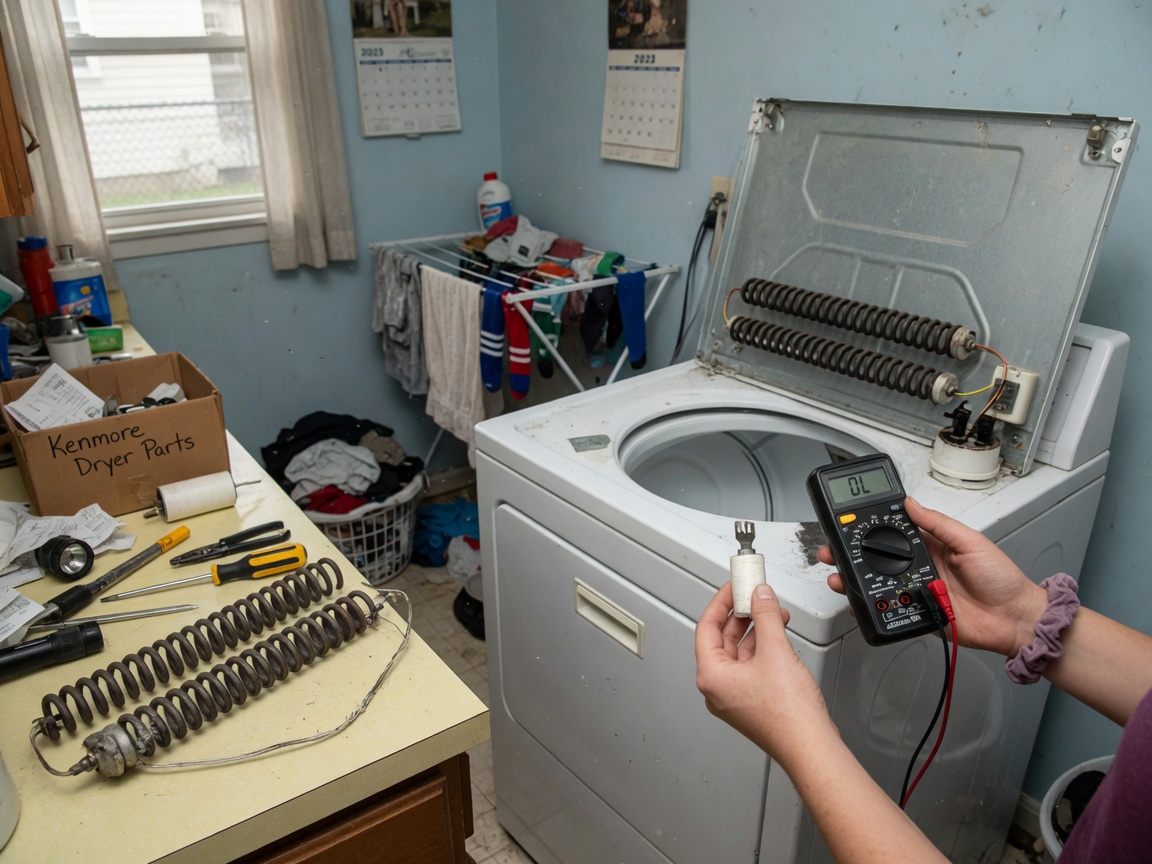
A dryer not heating almost always comes down to one of two parts: a blown thermal fuse or a failed heating element. Both leave you with a machine that tumbles clothes but doesn't dry them, so the fix depends on telling the two apart before anything gets replaced. Call (615) 412-2497 if you want to talk through what you're seeing.
Dryer not getting hot, dryer not drying, and why is my dryer not drying all describe the same starting point: the drum turns, but nothing warms up.
The two parts fail for different reasons, and telling them apart before scheduling a visit means a technician can bring the right one instead of guessing. Both are common, and neither is a sign the dryer is on its way out on its own.
Thermal Fuse: What It Does and Why It Blows
The thermal fuse sits on the exhaust path and trips permanently once air coming off the heating element runs too hot. Restricted vents from lint buildup, crushed ducting behind the machine, or an overloaded load that keeps the element running too long are the usual triggers.
Once the fuse opens, the dryer won't heat again until it's replaced, even though the drum keeps turning, because the fuse only cuts power to the heating circuit, not the motor. Feel for airflow at the outside vent while the dryer runs a timed cycle: air moving with no warmth points straight at the fuse.
Heating Element: What Failure Looks Like
The heating element is a coiled length of wire that converts electricity into heat. When it breaks, the dryer runs its full cycle exactly as normal, the timer advances, the drum turns, and clothes come out just as damp as they went in.
A multimeter test across the element terminals confirms it: infinite resistance means the coil has broken somewhere inside. Unlike a fuse, a new element rarely fails right away unless the vent restriction that killed the original one is still in place.
Humid stretches of the year push the element harder, since it has to work longer to drive moisture out of each load. A dryer that's run hard through a wet summer, especially in a laundry space without much air movement, is more likely to wear an element out early.
Amana, Samsung, and Other Common Models
An Amana dryer not heating and a Samsung dryer not getting hot usually point to the same two parts as any other brand, a blown fuse or a failed element, though the exact part number and the panel you remove to reach it varies by model. Telling us the brand and model when you call helps a technician bring the right part on the first visit.
Vent Fire Risk
A restricted dryer vent isn't just a heat problem. Lint trapped in a long or crushed duct run is a fire hazard, and it's often the same restriction that blew the thermal fuse in the first place. If you notice the outside of the dryer running hot to the touch, a burning smell, or lint collecting visibly at the vent hood outside the house, stop using the dryer and call (615) 412-2497 before running another cycle.
When to Stop and Call
Keep using the dryer for one more diagnostic cycle if you're just trying to confirm airflow with the vent disconnected. Stop immediately and call if you smell burning, see scorch marks near the back panel, or the outside vent hood shows heavy lint buildup. Those are vent and fire-risk signs, not just a parts question.
Narrowing It Down Before You Call
Run a timed dry cycle with the vent hose disconnected and pointed away from anything flammable, then check a few things: strong airflow with zero heat usually means the fuse, weak or no airflow points to a clogged vent rather than the element, and repeated clicking from the high-limit thermostat with no heat often means an open element circuit.
Repair or Replace
A dryer under about ten years old with everything else working is usually worth repairing, whichever part turns out to be at fault. Older units showing wear elsewhere, a worn drum, a slipping belt, a noisy idler pulley, alongside the heat problem are worth a second look before spending on another part.
A technician can point out that wear during the same visit that fixes the heat issue, so you're not stuck making that call on your own from a list of symptoms. Either way, a dryer that's stopped heating is worth acting on quickly. A backlog of wet laundry is an annoyance, but a restricted vent left unaddressed is the bigger concern.
Getting It Fixed
Dryer repair covers both the fuse and the element, along with the vent check that keeps either one from failing again. Call (615) 412-2497, Monday through Saturday between 8am and 7pm, and we'll help you sort out which part is behind a dryer that's not heating.